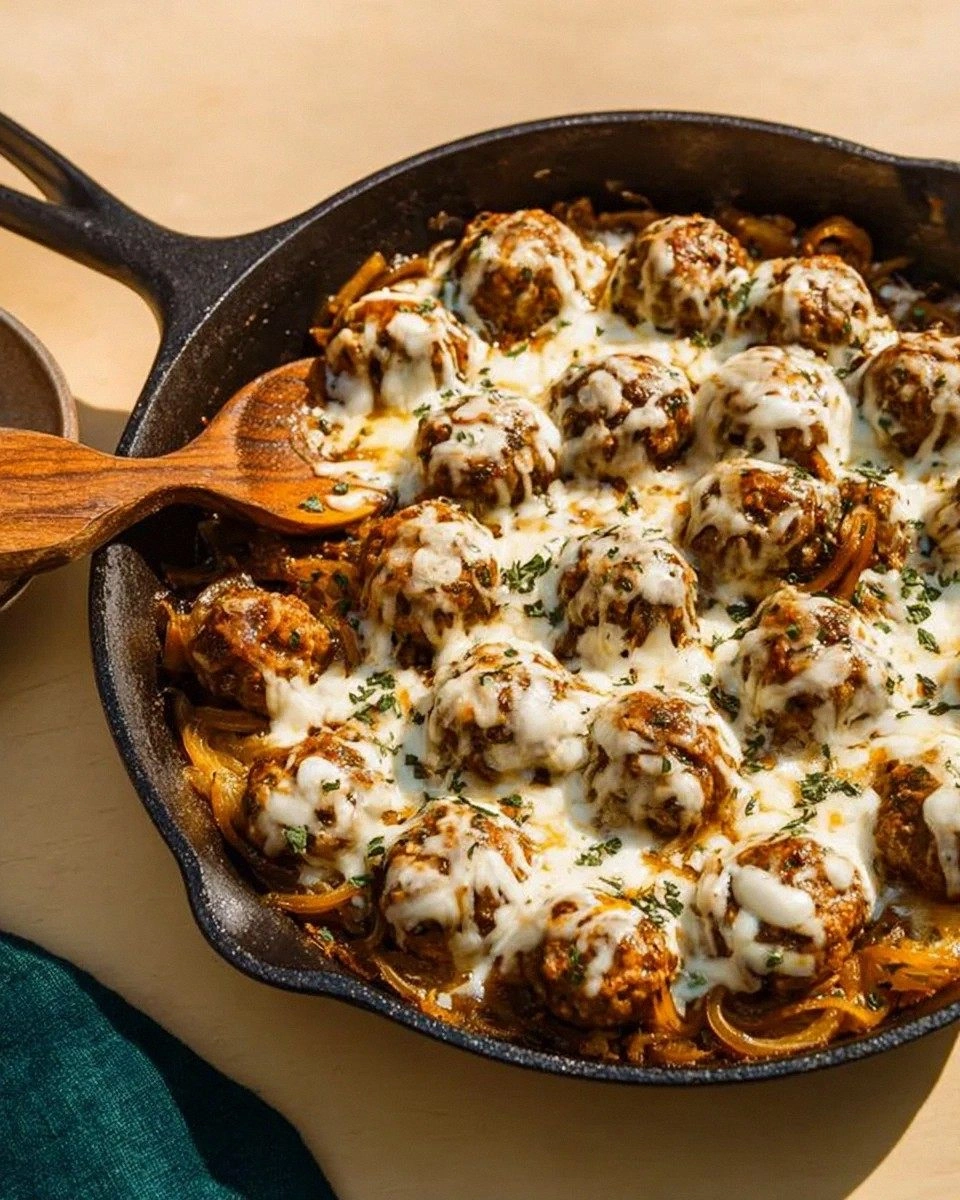
I burned the onions. Not just a little caramelized-around-the-edges kind of burned — I’m talking full charcoal briquette, smoke-alarm-serenading, open-all-the-windows-in-February kind of burned. The kind of culinary disaster that makes you question your life choices while frantically fanning a dish towel at the ceiling. But here’s the thing: that spectacular failure led me to the most ridiculously good meatball I’ve ever tasted. Because while I was scraping those blackened onion bits into the trash, I realized I’d been making French onion everything wrong for years. We all chase that deep, jammy sweetness, but we stop halfway. We get impatient. We settle for beige when we could have mahogany. And that’s exactly why these Cheesy French Onion Meatballs exist — they’re what happens when you refuse to settle, when you treat onions like the divas they are, and when you finally understand that great food demands great drama.
Picture this: It’s Sunday afternoon, the kind of grey winter day that makes you want to hibernate under a blanket of melted Gruyère. You’ve got a playlist of moody jazz and a bottle of cheap red wine that’s somehow better because it’s Tuesday-priced on a weekend. The onions hit the pan with a hiss that sounds like applause, and within minutes your kitchen smells like a Parisian bistro had a baby with your grandmother’s pot roast. That’s when you know you’re on the right track. These meatballs don’t just borrow flavors from French onion soup — they steal the whole show, then run off with the cheese course and the dinner rolls for good measure.
What makes these different from every other “French onion” recipe cluttering your feed? We’re not just mixing raw onions into meat and calling it a day. We’re building layers upon layers of flavor, starting with onions cooked so slowly they practically melt into a savory jam, then folding that umami bomb right into the meat along with nutty Gruyère that stays molten even after baking. The result is a meatball that tastes like someone captured the soul of French onion soup and gave it a meaty, cheesy, golden-brown body. I dare you to taste one hot from the pan and not immediately reach for another while making inappropriate noises.
Okay, ready for the game-changer? We’re not stopping at onions and cheese. We’re adding a secret ingredient that makes the whole thing taste like it’s been simmering in a French grandmother’s kitchen for three generations. It’s probably sitting in your pantry right now, rolling its eyes at how overlooked it’s been. Stay with me here — this is worth it. Let me walk you through every single step — by the end, you’ll wonder how you ever made it any other way.
What Makes This Version Stand Out
Depth Charge: These meatballs don’t just flirt with onion flavor — they marry it, move in together, and start a whole onion family. We’re talking about onions cooked down for a full forty-five minutes until they’re darker than your morning coffee and twice as complex. Most recipes rush this step and end up with sad, sharp little onion bits that taste like disappointment.
Cheese Strategy: We use not one but two cheeses, each with a specific job. Gruyère melts into silky pockets that stretch like pizza commercial cheese pulls, while a whisper of Parmesan in the meat itself acts like culinary glue, keeping everything tender and juicy even if you accidentally overcook them by two minutes while Instagramming your progress.
Texture Wizardry: The secret to meatballs that stay plush instead of turning into golf balls? We borrow a trick from Italian nonnas: a panade made with milk and panko that keeps things cloud-soft. Plus, those caramelized onions add natural sweetness that balances the rich beef beautifully.
One-Pan Magic: Everything happens in a single skillet, including the sauce. No separate pots, no straining, no juggling multiple timers like a circus act. The fond from searing the meatballs becomes the base for an onion gravy so good you’ll want to bathe in it.
Make-Ahead Champion: These freeze like champions. Roll a double batch, freeze them raw on a sheet pan, then toss the frozen meatballs into a bag for instant dinner glory on those nights when even ordering takeout feels like too much effort.
Crowd Reaction: I’ve served these at game nights, dinner parties, and that awkward work potluck where everyone brings store-bought cookies. They disappear first, every single time. People will corner you for the recipe while their mouths are still full — it’s practically a hostage situation.
Leftover Potential: Slice them onto sandwiches, crumble them over pasta, or just eat them cold from the fridge at 2 AM while standing in your pajamas. I’ve done all three in the same week and have zero regrets.
Alright, let's break down exactly what goes into this masterpiece...
Inside the Ingredient List
The Flavor Base
Yellow onions are the workhorses here — they’ve got enough sugar to caramelize properly without turning bitter like their red cousins. You’ll need three large ones, which seems excessive until you watch them shrink down to a jammy pile that could fit in a coffee mug. Don’t you dare use sweet onions; they’ll make the final dish taste like candy meat, and nobody wants that. The key is cooking them past the point where you think they’re done, past the point where your kitchen smells like onion perfume, until they turn the color of antique mahogany and taste like savory onion honey.
Butter and olive oil form the dream team for caramelizing. Butter brings the flavor, oil prevents burning, and together they let you cook those onions low and slow without setting off your smoke detector. Use the good butter here — the kind that’s yellow from grass-fed cows, not the pale stuff that tastes like sadness. And please, for the love of Julia Child, don’t crowd the pan or the onions will steam instead of caramelize, and you’ll end up with onion mush that tastes like regret.
The Texture Crew
Ground beef needs enough fat to stay juicy but not so much that you’re eating grease bombs. I use 80/20 because it strikes that perfect balance between flavor and structural integrity. Anything leaner and your meatballs will bounce off the plate; anything fattier and you’ll need a nap after eating three. Let it come to room temperature before mixing — cold meat tightens up and makes tough meatballs that could double as tennis balls.
Panko breadcrumbs are my secret weapon for texture that’s tender but not mushy. Regular breadcrumbs absorb liquid like a sponge and turn to paste, but panko’s light, airy structure creates little pockets that keep the meat juicy. If you only have regular breadcrumbs, pulse them briefly in a food processor to break them down slightly — your future self will thank you when you’re not chewing meat-flavored library paste.
The Unexpected Star
Worcestershire sauce is the ingredient everyone overlooks, but it’s what makes these taste like they’ve been aging in a steakhouse basement. Just a tablespoon adds layers of anchovy-fueled umami that makes people ask “what’s that flavor?” in the best possible way. It’s like adding a bass line to a song — you might not notice it’s there, but you’d miss it if it disappeared.
Fresh thyme brings an herby note that connects the onions to the beef in a way that dried thyme just can’t manage. Strip the leaves off the stems with your fingers — it’s meditative and makes you feel like you’re cooking somewhere fancier than your rental kitchen with the crooked cabinet doors. If you absolutely must substitute, use half the amount of dried thyme, but know that you’re missing out on the essential oils that make fresh herbs magical.
The Final Flourish
Gruyère cheese is non-negotiable here. Yes, it costs more than the rubbery pre-shredded stuff, but it melts into silky threads that taste like toasted nuts and caramel had a beautiful baby. Buy it in a block and shred it yourself — the pre-shredded bags contain cellulose that prevents smooth melting, leaving you with tiny cheese pebbles instead of molten gold. If you can’t find Gruyère, Swiss Emmental works, but please don’t tell the Swiss I said that.
Beef broth forms the base of our sauce, but not the salty canned stuff that tastes like liquid beef bouillon cube. Use low-sodium broth so you can control the salt level — these meatballs are already flavor bombs, and over-salting is the fastest way to ruin dinner. Better Than Bouillon paste whisked into hot water gives you restaurant-quality depth without the scary ingredient list of most commercial broths.
Everything's prepped? Good. Let's get into the real action...
The Method — Step by Step
- Start with the onions because they need time to become their best selves. Slice them pole-to-pole so they hold their shape during the long cook — this isn’t the time for sloppy half-moons that dissolve into nothing. Heat your largest skillet over medium-low and add two tablespoons each of butter and olive oil. When the butter stops foaming, add all the onions at once — yes, it looks like too much, but they’ll shrink by 75%. Sprinkle with half a teaspoon of salt to draw out moisture, then stir every five minutes for the next forty-five minutes. Your kitchen will smell like onion heaven, and you’ll start plotting ways to bottle this aroma as perfume.
- While the onions work their magic, prep everything else so you’re ready when they’re done. Grate your Gruyère using the large holes of a box grater — you want shreds, not dust, so they melt into glorious cheese pulls. Mix your panko with milk in a small bowl and let it soak while you mince the garlic and thyme. This panade is insurance against tough meatballs, so don’t skip it even if you’re tempted to rush ahead. The mixture should look like wet sand and feel like a very sad sponge.
- Check your onions — they should be the color of strong tea and taste like savory candy. If they’re still pale, keep cooking and question your patience levels. Once they’re ready, transfer half to a cutting board and chop them finely so they distribute evenly through the meat. The other half stays in the pan to become the base of your sauce. This is where most recipes get it wrong — they either leave the onions whole (hello, onion chunks in every bite) or they mix raw onions into the meat (hello, meatloaf texture).
- In a large bowl, combine your ground beef, chopped caramelized onions, soaked panko, egg, minced garlic, thyme, Worcestershire, salt, and pepper. Use your hands — yes, they’ll get messy, but forks compact the meat and make tough meatballs. Mix just until everything comes together, like you’re giving the meat a gentle massage rather than kneading bread. Over-mixing is the enemy of tender meatballs, so channel your inner zen master and stop when you can’t see distinct ingredients anymore.
- Portion the mixture using a medium cookie scoop or two spoons — you want golf ball-sized portions that will cook evenly. Roll them gently between your palms; think of cradling a baby bird rather than compressing a stress ball. Place them on a sheet pan as you go, and don’t worry if they’re not identical — rustic charm tastes better than perfect spheres anyway. You should get about 24 meatballs, which sounds like a lot until you watch them disappear.
- Heat the same skillet (don’t you dare wash it — those brown bits are pure flavor) over medium-high with another tablespoon of oil. When it shimmers like a mirage, add the meatballs in batches, being careful not to crowd them. They should sizzle immediately — if they don’t, your pan isn’t hot enough and they’ll stick like they’re glued down. Brown them on all sides, about two minutes per side, until they develop a crust that looks like a tiny meatball steak. Don’t cook them through; we’re just building flavor here.
- Remove the meatballs to a plate and build your sauce in the same pan. Add a splash of wine to deglaze, scraping up all those gorgeous brown bits with a wooden spoon. Let it bubble until reduced by half — your kitchen will smell like you’re opening a wine bar. Stir in the beef broth and remaining caramelized onions, then nestle the meatballs back in the pan. They should be mostly submerged in the liquid, like they’re taking a savory spa day.
- Cover and simmer for fifteen minutes, during which time your house will smell so good that neighbors might start dropping by with empty Tupperware. The sauce will thicken slightly as the starch from the meatballs mingles with the broth, creating a glossy gravy that coats everything in oniony goodness. Resist lifting the lid too often — you want that steam to stay trapped, gently finishing the cooking process while keeping everything moist.
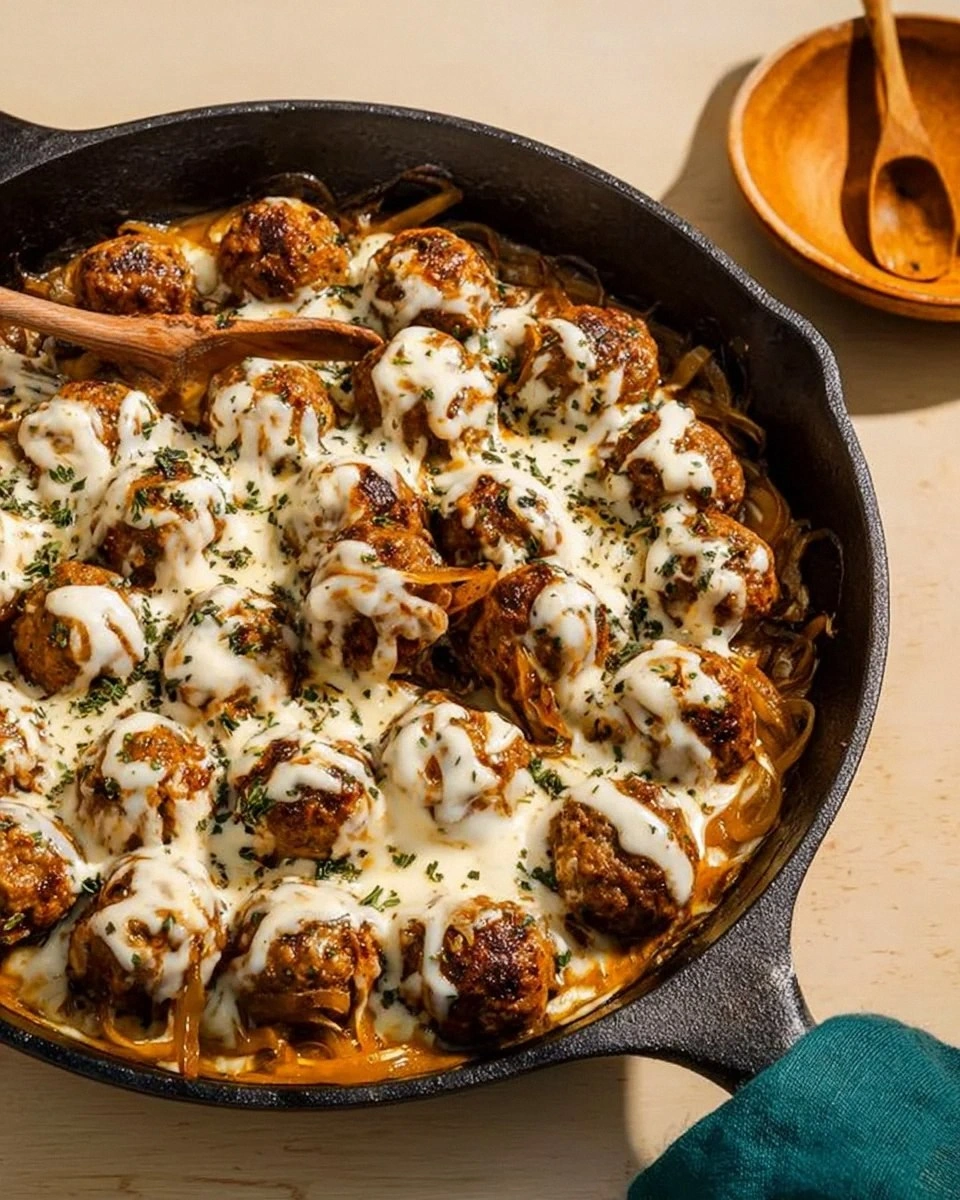
- Now for the grand finale: sprinkle the grated Gruyère over the top, cover again, and let it melt into a molten blanket of cheese that stretches like you’re in a commercial. This takes about two minutes, during which time you should be setting the table because once that cheese melts, resistance becomes futile. The cheese should be completely melted but not browned — we want silky fondue vibes, not crispy cheese frico (save that for another day).
- Garnish with fresh thyme leaves and serve directly from the pan because presentation is overrated when you’ve got cheese pulls this epic. The meatballs should be tender enough to cut with a fork, swimming in that onion gravy that tastes like someone distilled the essence of French onion soup into liquid form. I dare you to taste this and not go back for seconds before you’ve even finished your first serving.
That's it — you did it. But hold on, I've got a few more tricks that'll take this to another level...
Insider Tricks for Flawless Results
The Temperature Rule Nobody Follows
Room temperature meat mixes more evenly and stays tender — it’s that simple, yet everyone skips this step and wonders why their meatballs resemble hockey pucks. Take your ground beef out of the fridge 30 minutes before cooking, and while you’re at it, warm your milk for the panade. Cold liquid makes the fat seize up, creating tiny pockets that melt during cooking and leave you with dry, crumbly meatballs. A friend tried skipping this step once — let’s just say her meatballs could have doubled as cat toys, and not in a cute way.
Why Your Nose Knows Best
Trust your sense of smell more than the clock when caramelizing onions. They’re done when your kitchen smells like you’re standing in the middle of a French market at dusk, not when some recipe tells you they should be ready. If they still smell sharp and oniony, keep going. If they start to smell slightly sweet and deeply savory, you’re there. And if they smell like they’re burning? Congratulations, you’ve just made onion charcoal — scrape it out and start over, because there’s no saving that situation.
The 5-Minute Rest That Changes Everything
After mixing your meat, let it rest for five minutes before rolling. This gives the panko time to fully hydrate and the flavors to meld together like they’re at a meatball mixer. During this time, the proteins relax instead of seizing up when they hit the hot pan, resulting in meatballs that stay tender even if you accidentally overcook them by a minute or two. Use this time to clean up, pour yourself a glass of wine, or just stare at the wall — five minutes of patience now saves you from chewing through meat rocks later.
Cheese That Actually Melts
Pre-shredded cheese contains cellulose to prevent clumping, but that same cellulose prevents smooth melting. Buy your Gruyère in a block and shred it yourself — yes, it’s extra work, but the difference between stringy cheese pulls and grainy cheese pebbles is worth the arm workout. If you’re feeling especially fancy, shred it on the large holes of a box grater for maximum meltability, or use a vegetable peeler for thin ribbons that melt into velvet. And please, don’t substitute with pre-shredded mozzarella unless you want your meatballs to taste like a pizza chain appetizer.
The Sauce Thickens (Literally)
If your sauce seems thin after simmering, don’t panic — it will continue to thicken as it cools slightly. The starch from the meatballs and the natural pectin from the onions create a glossy gravy that coats the back of a spoon. If you absolutely must thicken it, whisk a teaspoon of cornstarch with cold water and stir it in during the last minute of cooking. But try it first — you might be surprised how luxuriously it coats everything without any help.
Make-Ahead Magic
These meatballs freeze beautifully either raw or cooked. For raw freezing, roll them and space them on a sheet pan until solid, then toss them in a bag for up to three months. Cook from frozen by adding an extra five minutes to the simmering time. For cooked leftovers, freeze them in the sauce in portion-sized containers — they reheat like a dream in the microwave or on the stove with a splash of broth. I’ve been known to double the batch just to ensure future me has emergency dinner situations covered.
Creative Twists and Variations
This recipe is a playground. Here are some of my favorite ways to switch things up:
The French Dip Sandwich Situation
Pile three meatballs onto a crusty baguette, ladle over some of that onion gravy, and add extra Gruyère before broiling until bubbly. Serve with the remaining sauce for dipping — it’s like French onion soup and a meatball sub had a beautiful, messy baby that requires both hands and multiple napkins. The bread soaks up the gravy while staying crispy at the edges, creating textural contrast that makes grown adults weep with joy.
Mini Appetizer Mode
Roll the mixture into marble-sized portions and bake them on a sheet pan for cocktail party vibes. Skewer them with toothpicks and serve the sauce as a dip — they’ll disappear faster than you can say “open bar.” These mini versions get extra crispy on the outside while staying tender inside, and they’re the perfect size for popping in your mouth while pretending you’re not counting how many you’ve eaten.
The Vegetarian Flip
Substitute lentils and mushrooms for the beef — cook green lentils until just tender, then pulse with sautéed mushrooms to create a meaty texture that even carnivores devour. The caramelized onions and Gruyère stay the same, creating a vegetarian version that doesn’t feel like a sad compromise. My vegetarian sister claims these are better than the original, though she might be biased after years of sad veggie meatballs at family gatherings.
Spicy Spanish Twist
Add smoked paprika and a pinch of cayenne to the meat, swap the Gruyère for Manchego, and deglaze with sherry instead of red wine. The result tastes like tapas got cozy with French onion soup — smoky, spicy, and completely addictive. Serve with crusty bread for sopping up the paprika-tinted sauce that tastes like it came from a Barcelona grandmother’s kitchen.
Breakfast of Champions
Slice leftover meatballs and fry them with potatoes for the hash of your dreams. Top with a runny egg and watch the yolk mingle with the onion gravy — it’s like French onion soup and corned beef hash had a beautiful, hangover-curing baby. This is weekend brunch goals, especially when served with strong coffee and zero plans for the rest of the day.
Stuffed Pepper Vehicle
Hollow out bell peppers and pack them with the raw meatball mixture, then bake them in a bath of the onion gravy. The peppers roast into sweet, silky vessels while the meat stays moist and the cheese melts into every crevice. It’s like someone turned French onion soup into a complete meal that happens to include vegetables, making it practically health food if you squint hard enough.
Storing and Bringing It Back to Life
Fridge Storage
Cooled meatballs keep for up to four days in an airtight container, though they’ve never lasted more than two in my house. Store them submerged in the sauce to prevent them from drying out — the gravy acts like a flavorful protective blanket. If you’re storing just the meatballs without sauce, wrap them individually in plastic wrap before placing in a container; this prevents them from sticking together in one giant meatball blob that requires a chisel to separate.
Freezer Friendly
Freeze cooked meatballs in the sauce for up to three months — they’ll taste almost as good as fresh when reheated properly. Use freezer bags laid flat for space-saving storage, or portion them into individual containers for grab-and-go lunches. Label them clearly because frozen onion gravy looks suspiciously like many other things, and surprise meatball lunches are only fun when they’re actually meatballs. For best texture, thaw overnight in the fridge rather than using the microwave defrost setting, which can turn the edges rubbery while the centers stay frozen.
Best Reheating Method
Gently reheat in a covered skillet with a splash of broth or water over medium-low heat, stirring occasionally until heated through. The steam helps restore them to their former glory without drying them out or turning the sauce into glue. If you’re in a rush, the microwave works, but add a tablespoon of water and cover with a damp paper towel to create a mini steam bath. Whatever you do, don’t reheat them at high heat — you’ll end up with tough meatballs and broken sauce that looks like it’s been through a blender.