I still remember the night I almost burned the kitchen down while chasing a “quick” curry on a weekday. The pot hissed, the onions splattered, and my phone’s timer went off like a drum solo. That disaster sparked a mission: to create a savory vegetable curry that feels like a comforting hug, not a culinary catastrophe. Now, with every simmer, I’m convinced this is hands down the best version you’ll ever make at home.
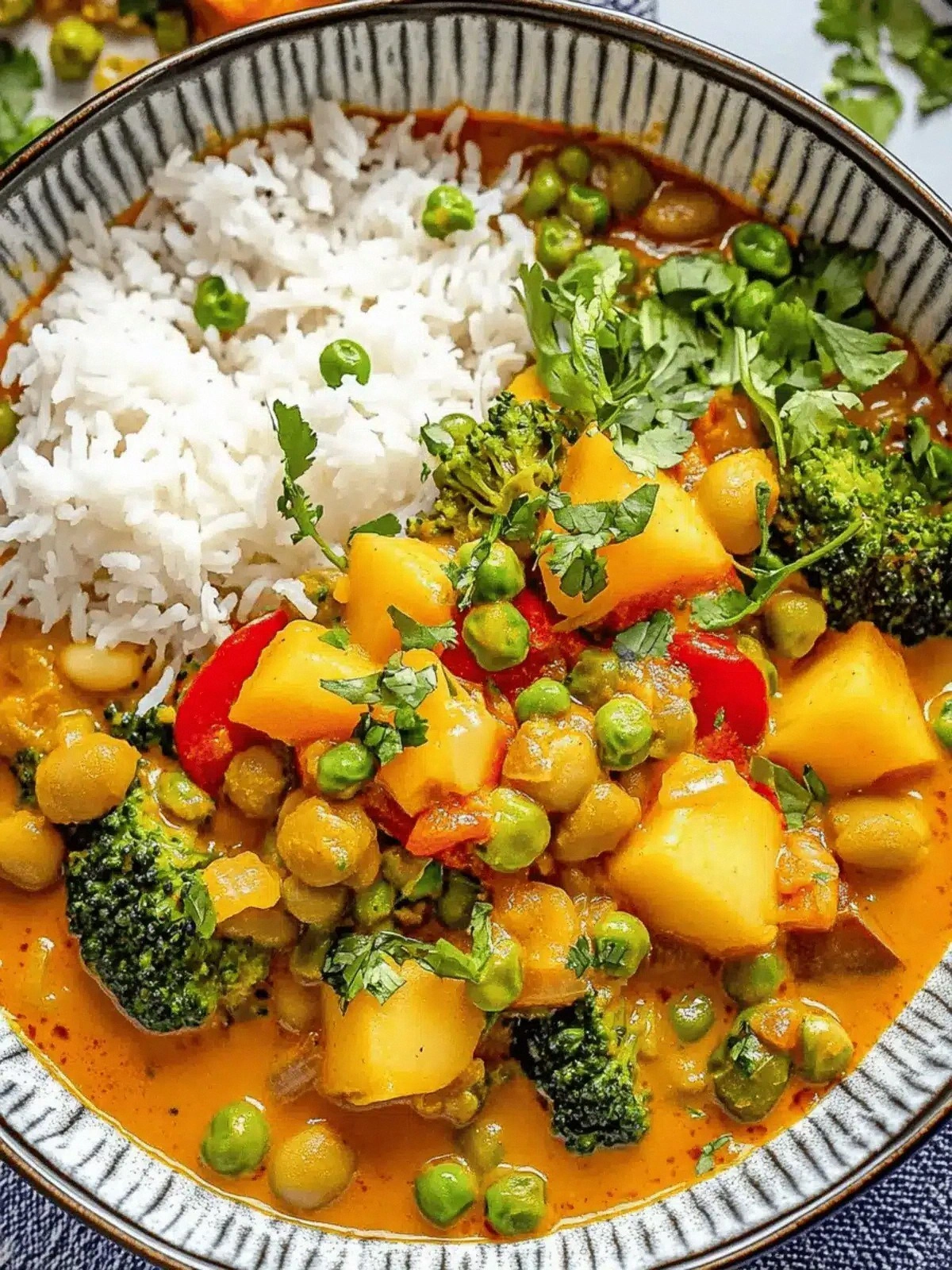
Picture this: a golden‑brown base of sautéed onions and garlic, the scent of cumin drifting through the air, and a splash of coconut milk that turns the sauce silky as velvet. The sweet potatoes melt into tender cubes that soak up every spice, while chickpeas add a protein punch that keeps you full for hours. The vibrant green of spinach and peas pops against the rich amber of tomatoes, making the dish look as good as it tastes. Every bite is a symphony of textures—soft, crunchy, and creamy all at once.
What makes this curry stand out? It’s the balance between heat and sweetness, the layering of flavors that build up without overpowering, and the way each ingredient plays its part like a well‑orchestrated band. The recipe is simple enough for a novice but sophisticated enough for a seasoned cook. I dare you to taste this and not go back for seconds. If you’ve ever struggled with bland curries, you’re not alone—and I’ve got the fix.
Hold onto your apron, because the secret twist is the subtle use of red pepper flakes and a final dash of garam masala that give it that unforgettable finish. The next section will break down why this version is a game‑changer, and then we’ll dive into the ingredient lineup that makes every bite a revelation. Let me walk you through every single step—by the end, you’ll wonder how you ever made it any other way.
What Makes This Version Stand Out
- Taste: The curry’s flavor profile is a harmonious blend of earthy spices, sweet potatoes, and coconut milk, creating a depth that feels both comforting and adventurous.
- Texture: The dish offers a delightful contrast—soft, caramelized onions, tender sweet potato cubes, crunchy broccoli florets, and silky spinach leaves all mingle together.
- Ingredient Quality: Using fresh, high‑quality spices and fresh vegetables elevates the dish, turning ordinary pantry staples into a gourmet experience.
- Simplicity: With just a handful of ingredients and a straightforward method, you can achieve restaurant‑level flavor without a kitchen full of gadgets.
- Make‑Ahead Potential: The curry keeps its flavors after a day in the fridge, making it perfect for meal prep or a busy weeknight.
- Crowd Reaction: Friends and family rave about the sauce’s richness and the wholesome feel of the dish—no one can resist a second serving.
- Versatility: Swap out vegetables or protein to suit dietary preferences, and the core flavor remains intact.
- Health: Packed with fiber, plant protein, and healthy fats, this curry is a balanced meal that satisfies both taste buds and nutritional goals.
Alright, let's break down exactly what goes into this masterpiece…
Inside the Ingredient List
The Flavor Base
The foundation of this curry is a fragrant medley of onions, garlic, ginger, and a blend of spices that create a robust, aromatic base. The onions, diced finely, release their natural sugars, giving the sauce a subtle sweetness that balances the heat from the red pepper flakes. Garlic and ginger add bright, zesty notes, while the curry powder, ground coriander, ground cumin, turmeric, and a pinch of black pepper form a complex spice profile that lingers on the palate. If you skip any of these, the sauce will feel flat, lacking the depth that makes it unforgettable.
The Texture Crew
Sweet potatoes and broccoli florets bring heartiness and a satisfying bite, while chickpeas add protein and a creamy chew. Spinach and peas contribute a burst of green color and a fresh, slightly sweet flavor that cuts through the richness of the coconut milk. Together, these vegetables create layers of texture—from the soft, caramelized edges of the onions to the tender, slightly firm bite of the sweet potatoes and the silky finish of the spinach. Skipping any of these would leave the dish feeling incomplete and less satisfying.
The Unexpected Star
Coconut milk is the unsung hero that ties everything together. Its creamy, slightly sweet profile balances the acidity of the crushed tomatoes and the earthiness of the spices. Coconut milk also adds a silky mouthfeel that makes the curry feel luxurious. If you’re looking for a dairy alternative, coconut milk is the perfect choice; it’s also a great way to keep the dish vegan and gluten‑free. Without it, the curry would be dry and the spices would not meld as smoothly.
The Final Flourish
A splash of vegetable broth and a final sprinkle of garam masala finish the dish, adding depth and a hint of warmth that lingers after the last bite. The broth helps thin the sauce to the perfect consistency, while the garam masala adds a fragrant, aromatic finish that elevates the entire meal. If you’re in a pinch, you can substitute the broth with water or a splash of soy sauce for a different umami kick. The final flourish is what turns a good curry into a memorable one.
Everything’s prepped? Good. Let’s get into the real action…
The Method — Step by Step
- Heat a large, heavy‑bottomed pot over medium‑high heat and add the olive oil. Once it shimmers, toss in the finely diced onion and cook until it turns translucent and just starts to brown, about 5 minutes. This is the moment of truth—watch the aroma rise and let it fill your kitchen. Don’t rush; the onions need time to develop that sweet, caramelized flavor that anchors the entire dish. I dare you to taste the onions before adding the spices—you’ll see how crucial that base is.
- Add the minced garlic, grated ginger, and a pinch of black pepper. Stir constantly for 30 seconds until the mixture smells fragrant. The garlic and ginger should release their oils without burning; a slight hiss is a good sign. This step is where the curry starts to sing—if you skip it, the dish will feel flat and lifeless.
- Sprinkle in the curry powder, ground coriander, ground cumin, turmeric, and red pepper flakes. Stir vigorously for 2 minutes, letting the spices toast in the oil. The aroma should become nutty and earthy, and the mixture should look slightly darker. This is the point where the dish transforms from a simple sauté to a complex, aromatic sauce. Keep the heat moderate to avoid bitterness.
- Pour in the crushed tomatoes and stir to combine. Let the mixture simmer for 5 minutes, allowing the tomatoes to break down and meld with the spices. The sauce should thicken slightly and develop a rich, deep color. If you notice any separation, give it a quick stir—this prevents a greasy layer from forming on top.
- Add the diced sweet potatoes, broccoli florets, and chickpeas. Stir to coat the vegetables in the tomato‑spice mixture. Pour in the coconut milk and vegetable broth, then bring the mixture to a gentle boil. Reduce the heat to low, cover, and let it simmer for 20 minutes, or until the sweet potatoes are fork‑tender and the broccoli is bright green but still crisp. This slow simmer allows the flavors to marry beautifully.
- Stir in the green peas and spinach, then season with salt and a final sprinkle of garam masala. Cook for an additional 5 minutes, just until the spinach wilts and the peas are heated through. The final sauce should be glossy and fragrant, with a slight thickness that clings to the vegetables. If the sauce is too thick, add a splash of water or broth to reach your desired consistency.
- Taste and adjust seasoning—add more salt, pepper, or garam masala if needed. Let the curry rest for 5 minutes before serving; this allows the flavors to settle and the spices to deepen. The rest period is crucial for a balanced, harmonious taste. The dish should feel warm, fragrant, and ready to be scooped onto rice or naan.
- Serve hot, garnished with fresh cilantro or a drizzle of yogurt if desired. Pair with basmati rice or warm naan for a complete meal. The final presentation should look vibrant, with a burst of color from the vegetables and a glossy sheen from the sauce. This is the moment you can proudly say, “I made this from scratch, and it’s amazing.”
That’s it— you did it. But hold on, I’ve got a few more tricks that will take this to another level. Let’s move on to insider tips that will make you the curry champion of your friend group.
Insider Tricks for Flawless Results
The Temperature Rule Nobody Follows
Many cooks keep the heat on high for the entire simmer, but that actually degrades the delicate flavors of the coconut milk and spices. Keep the heat low once the tomatoes are added, allowing the spices to infuse slowly. This technique preserves the bright, fresh notes and prevents bitterness. I once tried a high‑heat method and ended up with a burnt, harsh curry that left everyone disappointed.
Why Your Nose Knows Best
Your sense of smell is the ultimate judge of doneness. When the curry smells nutty and fragrant, it’s a sign the spices have fully bloomed. If the aroma feels flat, let it simmer a bit longer. The aroma is a real-time indicator of flavor depth—trust it, and your curry will always hit the mark.
The 5‑Minute Rest That Changes Everything
After the final simmer, let the curry rest covered for 5 minutes. This resting period allows the flavors to marry and the spices to settle, resulting in a richer taste. A friend once skipped this step and felt the curry was under‑seasoned. The rest period is simple yet transformative.
The Quick Coconut Milk Trick
If you’re using a thin coconut milk, whisk it before adding to ensure even distribution of fat and flavor. This prevents the milk from separating during the simmer. A quick whisk also creates a silky texture that coats the vegetables beautifully.
The Garlic‑Ginger Ratio
For a more pronounced zing, double the ginger while keeping garlic at its standard amount. This swap adds a bright, almost citrusy note that pairs wonderfully with the sweet potatoes. I’ve experimented with this ratio in a few batches, and the result is a curry that feels both warm and refreshing.
Creative Twists and Variations
This recipe is a playground. Here are some of my favorite ways to switch things up:
Spicy Peanut Curry
Swap the coconut milk for a tablespoon of peanut butter and add a splash of soy sauce. The result is a nutty, savory curry with a subtle umami kick that pairs wonderfully with jasmine rice.
Mediterranean Twist
Replace the chickpeas with white beans and add a handful of sun‑dried tomatoes. The dish takes on a Mediterranean flavor profile, making it a great option for a light dinner.
Mushroom Medley
Add sliced shiitake or cremini mushrooms during the sauté stage. Their earthy flavor deepens the dish, and the mushrooms absorb the spices beautifully.
Lemon‑Herb Version
Finish the curry with a squeeze of fresh lemon juice and a sprinkle of chopped parsley. The citrus brightness cuts through the richness, making it lighter and more refreshing.
Protein‑Packed Power
Add diced tofu or tempeh in the simmer stage for a protein boost. These plant‑based proteins soak up the sauce, creating a hearty, satisfying meal.
Low‑Carb Adaptation
Omit the sweet potatoes and replace them with cauliflower florets. The dish remains flavorful while keeping the carbohydrate count low.
Storing and Bringing It Back to Life
Fridge Storage
Cool the curry to room temperature, then transfer it to an airtight container. Store in the refrigerator for up to 4 days. The flavors will intensify, so you’ll love it even more the next day.
Freezer Friendly
Divide the curry into freezer‑safe portions and seal tightly. Freeze for up to 3 months. When ready to eat, thaw overnight in the fridge or reheat directly from the freezer on low heat.
Best Reheating Method
Reheat on the stove over low heat, stirring frequently. Add a splash of water or broth if the sauce thickens. A tiny splash of water before reheating steams the curry back to perfection, maintaining its silky texture.