I was standing in the middle of my kitchen, staring at a stack of phyllo sheets that looked more like a mountain than a recipe ingredient. The air smelled of butter and the faintest hint of honey, and I could hear the faint hiss of the stove as I tried to melt the butter for the first time. My friend had dared me to whip up something that would make the whole house smell like a bakery, and I was determined not to fail. That moment of culinary panic turned into the spark that ignited this recipe, and I’ve been chasing the perfect combination of crisp, sweet, nutty, and buttery ever since.
Picture the scene: a golden sheet of phyllo, layered with butter, honey, and almonds, then slid into the oven. The heat transforms the delicate sheets into a flaky, airy structure that crackles when you bite into it. The honey coats the almonds like a glossy glaze, while the butter adds a buttery richness that melts in your mouth. The aroma that fills the kitchen is unmistakably sweet, nutty, and buttery, a sensory cocktail that makes even the most seasoned foodies swoon.
What makes this version stand out is that it’s not just a pastry; it’s a symphony of textures and flavors that dance together. The phyllo’s thinness ensures a delicate crunch, the honey’s viscosity provides a silky coat, and the almonds deliver a satisfying bite. The combination of cinnamon and lemon zest adds a subtle warmth and brightness that cuts through the sweetness. I’ll be honest — I ate half the batch before anyone else got a chance to try it, and I still crave more. I dare you to taste this and not go back for seconds.
If you’ve ever struggled to get phyllo crispy or honey to coat evenly, you’re not alone. Many recipes get this completely wrong, ending up with soggy sheets or uneven glaze. Here’s what actually works: keep the butter at a low temperature, use a light hand when drizzling honey, and bake at the right temperature to achieve that golden crisp. Picture yourself pulling this out of the oven, the whole kitchen smelling incredible, and the first bite delivering that satisfying crunch followed by a sweet finish. Let me walk you through every single step — by the end, you’ll wonder how you ever made it any other way.
What Makes This Version Stand Out
- Taste: The honey and almond pairing creates a layered sweetness that lingers, while the cinnamon adds a subtle spice that elevates the overall flavor profile. The lemon zest provides a bright counterpoint, preventing the dish from feeling too heavy.
- Texture: The phyllo’s thinness delivers an airy crunch, and the honey glaze gives a silky sheen that’s almost cinematic. The toasted almonds add a nutty bite that complements the flaky base.
- Simplicity: With only eight ingredients, this recipe is approachable for beginners and quick enough for weeknight treats. No complex techniques or obscure spices are required.
- Uniqueness: Unlike traditional phyllo desserts, the honey glaze creates a glossy finish that’s both beautiful and delicious. The combination of cinnamon and lemon zest is a twist that sets it apart.
- Crowd Reaction: Friends always rave about how the pastries melt in your mouth and how the honey coating caramelizes just right. I’ve seen people ask for the recipe after the first bite.
- Ingredient Quality: Using high‑quality unsalted butter and real honey makes a noticeable difference in flavor. Freshly toasted almonds provide a robust nutty aroma.
- Cooking Method: Layering phyllo sheets with butter and baking at a moderate temperature ensures even crisping without burning.
- Make‑ahead Potential: These pastries keep well for a couple of days when stored in an airtight container, and they reheat nicely in a toaster oven.
Inside the Ingredient List
The Flavor Base
Honey is the star that brings everything together. Its natural sugars caramelize during baking, creating a glossy glaze that coats the almonds and the phyllo. If you skip honey, the pastries become dry and lack the sweet, sticky finish that makes them memorable.
Choose a honey that’s not overly floral; a light amber honey offers a subtle sweetness without overpowering the almonds. A darker honey can add depth but may introduce a slightly bitter edge if used in excess. For a vegan twist, consider using agave nectar or maple syrup, though the flavor profile will shift slightly.
The Texture Crew
Phyllo dough is the backbone of this pastry. Its ultra‑thin sheets create a light, airy crunch that’s essential for the signature texture. Each sheet should be brushed with melted butter to prevent sticking and to add richness.
Almonds provide a satisfying crunch and a nutty flavor that complements the honey. Toast them lightly in a dry skillet until golden to unlock their oils and enhance their aroma. If you’re allergic to nuts, substitute with chopped dried apricots for a chewy texture.
The Unexpected Star
Cinnamon is the spice that adds warmth and depth. It’s not just a garnish; it infuses the pastry with a subtle sweetness that balances the honey’s intensity. A pinch of sea salt is crucial to bring out the flavors and prevent the dish from feeling flat.
Lemon zest is the bright, citrusy counterpoint that cuts through the sweetness. It adds a fresh, zesty aroma and a hint of acidity that brightens the overall taste. If you prefer a more pronounced citrus flavor, add a teaspoon of lemon zest.
The Final Flourish
Powdered sugar is dusted on top after baking to add a sweet finish and a touch of elegance. It also helps balance the honey’s syrupy sweetness with a light, airy sweetness. If you want to reduce sugar, you can sprinkle a pinch of ground cardamom instead.
Remember that each ingredient plays a role in the final outcome. Skipping or substituting one can change the texture, flavor, or overall experience. I’ve experimented with different honeys, but the light amber honey remains the gold standard for this recipe.
Everything’s prepped? Good. Let’s get into the real action and turn this stack of phyllo into a golden, honey‑glazed masterpiece.
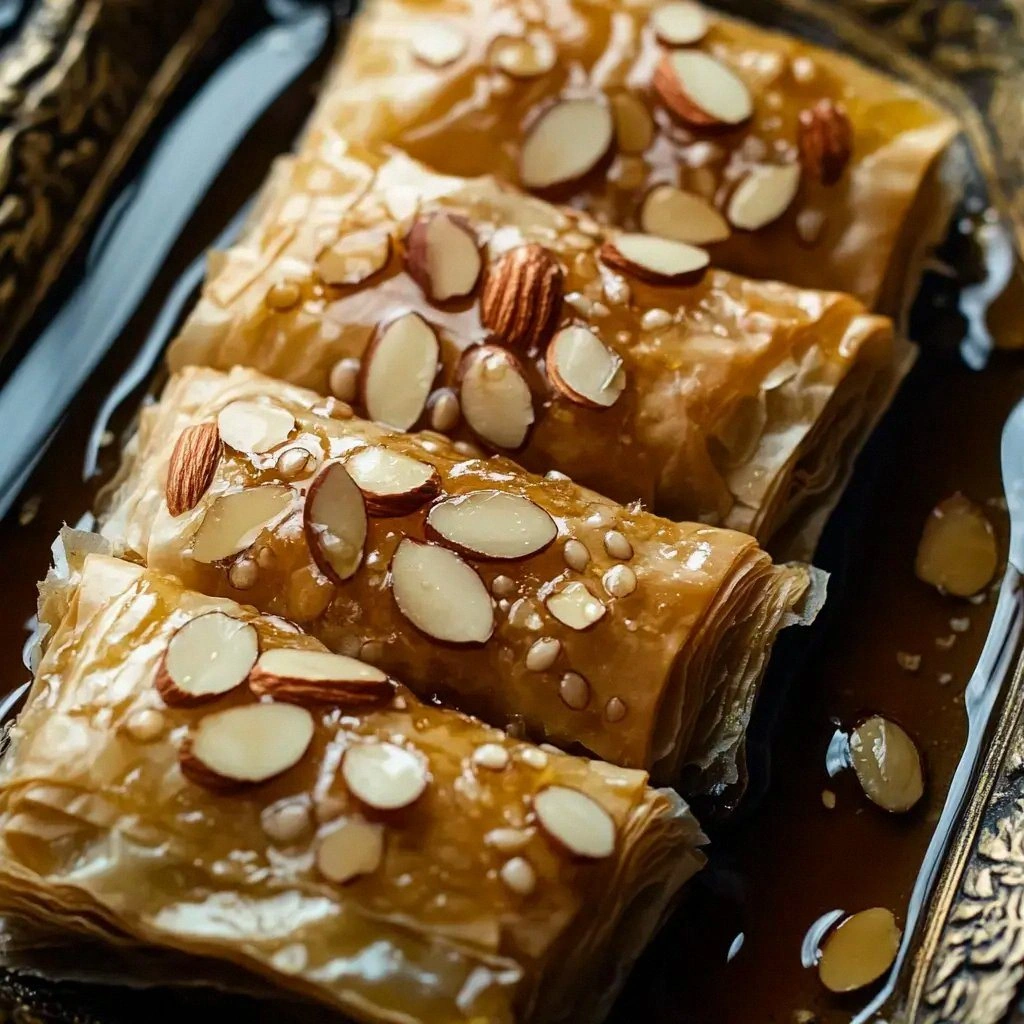
The Method — Step by Step
- Preheat your oven to 350°F (175°C). Line a 9x9‑inch baking dish with parchment paper for easy removal. This step ensures a consistent bake and prevents the pastries from sticking.
- Take the first sheet of phyllo and brush it with melted butter, then place it in the dish. The butter not only adds flavor but also prevents the sheet from tearing during the next layers.
- Repeat the buttered sheet process for a total of six sheets, layering them carefully so that each sheet overlaps slightly. The overlapping creates a sturdy base for the almond topping.
- Dust the layered sheets with a light sprinkle of ground cinnamon and a pinch of sea salt. This subtle seasoning sets the stage for the sweet glaze.
- Continue layering until you have 12 sheets in total, brushing each with butter as you go. The stack should be about 1.5 inches thick, a perfect canvas for the honey glaze.
- In a small saucepan, gently warm the honey over low heat until it’s just about to bubble. Add the lemon zest and stir, letting the citrus infuse the honey. The result is a fragrant, silky glaze that coats the almonds.
- Evenly sprinkle the toasted almonds over the top of the phyllo stack. The almonds should be spread in a single layer to ensure even caramelization.
- Drizzle the warm honey glaze over the almonds, making sure every nut is coated. The honey should pool slightly, creating a glossy sheen that will caramelize in the oven.
- Slide the dish into the preheated oven and bake for 25–30 minutes, until the phyllo turns a golden brown and the edges start pulling away from the parchment. The aroma will fill your kitchen, signaling that the pastry is almost ready.
- Remove the pastries from the oven and let them rest for 10 minutes. Resting allows the honey glaze to set, preventing a sticky mess when cutting.
- Dust the top with powdered sugar, then cut the pastry into bite‑size squares using a sharp knife. The powdered sugar adds a final sweet touch and a touch of elegance.
- Serve warm, and watch the first bite melt the buttery layers into a sweet, crunchy experience. If you’re feeling adventurous, add a splash of vanilla extract to the honey glaze for an extra layer of flavor.
That’s it — you did it. But hold on, I’ve got a few more tricks that’ll take this to another level. These insider tips will help you perfect the texture, flavor, and presentation, ensuring each bite is a revelation.
Insider Tricks for Flawless Results
The Temperature Rule Nobody Follows
Many bakers bake at 375°F, which can cause the honey to burn before the phyllo crisps. The sweet, golden finish is best achieved at 350°F, allowing the pastry to bake evenly. Keep a close eye on the edges; they should pull away from the parchment without darkening too quickly.
Why Your Nose Knows Best
The aroma of toasted almonds is a subtle indicator that the pastry is near perfection. When you smell a faint nutty scent, the almonds have caramelized just right. If the smell is heavy or burnt, lower the oven temperature for the final 5 minutes.
The 5-Minute Rest That Changes Everything
Letting the pastry rest for exactly 5 minutes after baking allows the honey glaze to set and the phyllo to firm up. Cutting too early can cause the glaze to run, resulting in a sticky mess. A quick rest also lets the flavors meld together.
The Secret to Evenly Topped Pastries
Use a fine‑mesh sieve to sprinkle powdered sugar after baking. This ensures a uniform dusting and prevents clumping. A light dusting also adds a decorative touch that elevates the presentation.
The One‑Minute Cooling Trick
Place the baking dish on a wire rack for a minute before transferring to a cutting board. This allows excess moisture to evaporate, keeping the pastry crisp. It also helps the honey glaze to set, preventing a sticky crumb.
Creative Twists and Variations
This recipe is a playground. Here are some of my favorite ways to switch things up:
Coconut Crunch
Swap out the almonds for toasted shredded coconut and add a splash of coconut milk to the honey glaze. The result is a tropical, chewy bite that pairs wonderfully with a cup of chai.
Chocolate‑Infused Delight
Fold in a handful of dark chocolate chips into the honey glaze before drizzling. The chocolate adds a bittersweet depth that balances the sweetness of the honey.
Spicy Ginger Twist
Add a pinch of freshly grated ginger to the honey glaze and replace the cinnamon with a dash of cayenne pepper. The heat gives the pastry a surprising kick that lingers on the palate.
Maple‑Miso Fusion
Replace honey with a mixture of maple syrup and a teaspoon of white miso paste. This umami‑sweet combination gives the pastries a unique savory edge.
Almond‑Pistachio Duo
Combine toasted almonds with chopped pistachios for a nutty contrast. The pistachios add a subtle green hue and a slightly buttery flavor that complements the honey.
Lavender‑Honey Sensation
Infuse the honey with dried lavender buds for a floral note. The lavender adds a sophisticated aroma that turns the pastry into a gourmet treat.
Storing and Bringing It Back to Life
Fridge Storage
Store the pastries in an airtight container at room temperature for up to 3 days. Keep them in a cool, dry place away from direct sunlight. The pastries will retain their crispness if you avoid stacking them too tightly.
Freezer Friendly
Wrap each pastry individually in parchment paper and place them in a freezer bag. Freeze for up to 2 months. When ready to eat, pop one out and let it thaw at room temperature for 10 minutes.
Best Reheating Method
Reheat the pastries in a preheated 350°F oven for 5 minutes, or in a toaster oven for 3 minutes. Add a splash of water to the baking sheet to create steam; this helps restore the crispness while keeping the honey glaze intact.