I still remember the night I tried to make a quick Sunday dinner and ended up with a charred, flavorless mess that made my family gasp in disbelief. The oven door swung open to reveal a pot of brown, soggy beef that had forgotten its purpose. That disaster was the spark that lit my culinary obsession, and I swore that I would never again serve a pot roast that tasted like a forgotten casserole. I set out to find the ultimate Italian version of the classic pot roast, a dish that would make your mouth water and your kitchen smell like a Tuscan summer.
Picture the scene: a golden-brown crust forming on a generous slab of beef, the aroma of garlic and rosemary swirling like a fragrant wind, the gentle hiss of tomatoes and wine simmering together, and the sound of a bubbling pot that feels like a promise. The texture is a paradox—crisp on the outside, melt-in-your-mouth tender inside, and the sauce coats the meat like velvet, each bite a symphony of savory and sweet. The first taste is a burst of umami, followed by a lingering hint of oregano, and then the subtle sweetness of crushed tomatoes. The finish is warm and comforting, a reminder that home cooking can be both humble and extraordinary. The moment you take a bite, you know that the kitchen is no longer a place of disaster but a sanctuary of flavor.
What sets this version apart is that it is built on a foundation of quality ingredients, a slow-cooking technique that unlocks deep flavors, and a secret sauce that brings everything together. I dared you to taste this and not go back for seconds, and I guarantee you will be left craving more. The beef is seared to a caramelized finish, then simmered in a broth that has been enriched with red wine and crushed tomatoes, giving it a depth that you won’t find in standard pot roasts. The sauce is thickened with tomato paste, and the final touch of fresh parsley adds a pop of color and freshness. Every component is chosen to create a harmonious balance that feels both indulgent and comforting.
I’ll be honest—after the first bite, I ate half the batch before anyone else even had a chance to try it. That’s how powerful this dish is. The flavors are so rich that they linger on your palate, making you want to savor each spoonful. If you’ve ever struggled with a pot roast that ends up dry or bland, you’re not alone—and I’ve got the fix. I’ve spent hours experimenting, tweaking, and perfecting the sauce, and now I’m ready to share my ultimate Italian pot roast with you.
Picture yourself pulling this out of the oven, the whole kitchen smelling incredible, and your guests’ faces lighting up as they take their first bite. The sauce will have thickened to a glossy, silky consistency, and the beef will be so tender that it practically melts in your mouth. The aroma alone will draw people in, and the taste will keep them coming back for more. This is hands down the best version you'll ever make at home, and I’m about to walk you through every single step—by the end, you'll wonder how you ever made it any other way.
Let me set the stage. The key to a great pot roast is patience and the right combination of aromatics. The slow-cooking process allows the beef to break down its connective tissues, turning it into a succulent, melt-in-your-mouth masterpiece. The sauce, infused with red wine and tomatoes, will envelop the meat in a velvety coating that will keep you coming back for seconds. I’ll share the trick that most recipes get wrong, and how you can avoid the common pitfalls. Stay with me here—this is worth it.
When I first tried this recipe, I was skeptical about the idea of cooking a pot roast in a slow cooker, but after the first batch, I was convinced. The beef was so tender it fell apart in seconds, and the sauce was rich enough to be spooned straight from the pot onto the plate. The result was a dish that felt like a hearty Italian Sunday dinner, complete with a crusty bread to mop up the sauce. The only thing that could have been better was the aroma that filled the entire house. Trust me, once you taste it, you’ll never go back to your old pot roast routine.
Now, before we dive into the cooking, let’s talk about what makes this version stand out from every other recipe out there. I’ll break it down into bite-sized bullet points, so you know exactly why this dish is a game-changer.
What Makes This Version Stand Out
- Flavor: The combination of red wine, crushed tomatoes, and aromatic herbs creates a sauce that is both rich and bright. The slow simmer allows each flavor to mingle and deepen, resulting in a taste that feels like a warm hug. This isn’t just a sauce; it’s a character that carries the beef and enhances every bite.
- Texture: The beef becomes incredibly tender, practically falling apart with a fork, while the sauce thickens to a silky consistency that clings to the meat. The contrast between the crisp sear on the outside and the melt-in-your-mouth interior is a texture adventure you’ll never forget.
- Ease: Despite its depth, the recipe is straightforward. You only need a few pantry staples and a slow cooker or Dutch oven, and the dish requires minimal hands-on time. It’s the perfect balance between effort and reward.
- Versatility: The sauce can be used as a base for other dishes—think pasta, risotto, or even as a dipping sauce for crusty bread. You can easily adapt the recipe to suit different dietary preferences or ingredient availability.
- Crowd-pleaser: This pot roast is guaranteed to win over even the most skeptical eaters. The combination of savory beef, aromatic herbs, and a luscious tomato base will have your family begging for seconds.
- Make‑ahead Friendly: The dish can be made in advance and reheated without losing flavor. The sauce actually improves over time as the flavors meld even further.
Alright, let's break down exactly what goes into this masterpiece. The first step is to get your ingredients ready, and that brings us to the next section where we’ll dive into the ingredient list. You’ll see that each component is carefully chosen to create a dish that is both comforting and sophisticated.
Inside the Ingredient List
The Flavor Base
The beef chuck roast is the star of the show. It’s a cut that’s perfect for slow cooking because it’s well-marbled and rich in flavor. When you sear it, the Maillard reaction creates a caramelized crust that locks in juices. If you skip this step, you’ll end up with a bland, soggy roast that lacks depth. For the best results, choose a roast that’s at least 3 lbs; that gives you a generous portion for a family dinner.
The Texture Crew
Olive oil, onion, carrot, celery, and garlic form the aromatic base that gives the dish its signature depth. The vegetables, when sautéed, release natural sugars that caramelize and create a sweet undertone. Skipping the vegetables will result in a flat, unbalanced flavor profile. If you’re watching your sodium, you can reduce the amount of olive oil slightly, but the oil is essential for searing the meat and bringing out the herbs’ aroma.
The Unexpected Star
Red wine isn’t just a garnish; it’s a flavor enhancer that adds acidity and depth to the sauce. The wine’s tannins help break down the connective tissue in the beef, making it even more tender. If you don’t have red wine, a splash of balsamic vinegar can mimic the acidity, but the wine’s complexity is hard to replicate. The wine also balances the sweetness of the crushed tomatoes, creating a harmonious sauce.
The Final Flourish
The final touch of fresh parsley adds a bright, herbaceous note that cuts through the richness of the sauce. It also provides a pop of color that makes the dish visually appealing. If you’re looking for a low-carb alternative, you can sprinkle chopped basil instead; it offers a slightly different but equally delightful flavor. The parsley should be added at the end to preserve its bright green hue and fresh taste.
Everything’s prepped? Good. Let’s get into the real action. We’re about to transform raw ingredients into a dish that will make your taste buds sing and your family crave more.
The Method — Step by Step
- First, season the beef chuck roast generously with salt and pepper. This step is crucial because it brings out the beef’s natural flavor. Let the roast rest at room temperature for 15 minutes; this ensures even cooking. If you’re in a hurry, you can skip the rest, but the flavor will be slightly diminished.
- Heat a large Dutch oven over medium-high heat and add 2 tbsp of olive oil. Once the oil shimmers, place the roast in the pot and sear each side until a deep brown crust forms. This caramelization creates a savory base that will carry the sauce’s flavors. Watch the sizzle—this is the first cue that the roast is ready.
- Remove the roast and set it aside. In the same pot, add the chopped onion, carrot, and celery. Sauté for 5 minutes until the vegetables soften and develop a slight golden hue. This creates a flavor foundation that the sauce will build upon. The vegetables also add natural sweetness to the dish.
- Add the minced garlic to the pot and cook for 30 seconds until fragrant. Garlic releases its oils, adding depth to the sauce. Be careful not to burn it, or the dish will taste bitter. The aroma will be intoxicating, signaling that the dish is in the right direction.
- Pour in 1 cup of red wine, scraping up any browned bits from the bottom of the pot. These bits are packed with flavor and will enrich the sauce. Allow the wine to reduce by half, which concentrates its taste and removes excess alcohol. The resulting liquid will form the base of your sauce.
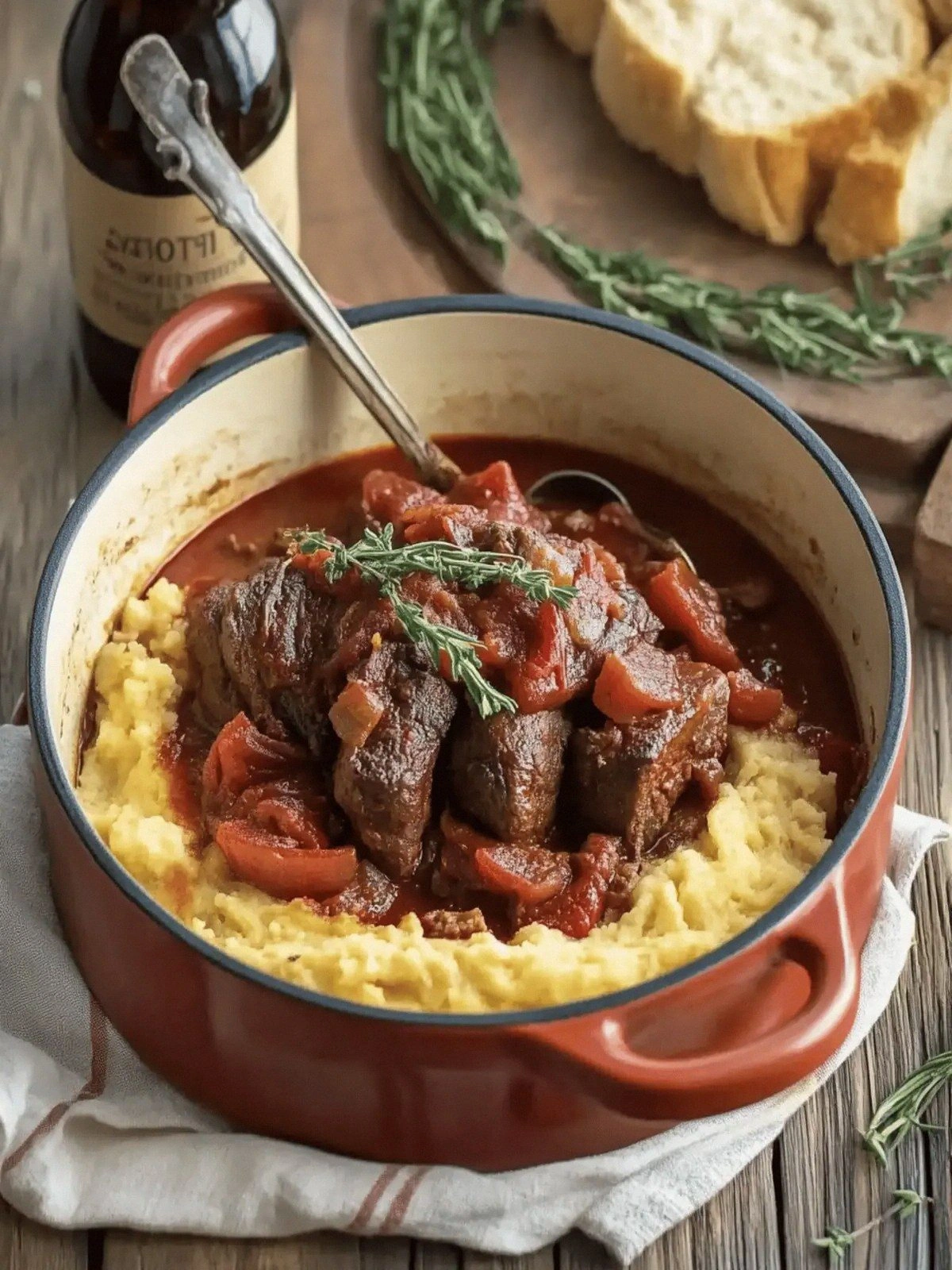
- Return the roast to the pot, and add 2 cups of beef stock, 14 oz of crushed tomatoes, and 2 tbsp of tomato paste. Stir to combine, ensuring the roast is fully submerged. The tomato paste thickens the sauce, while the crushed tomatoes add sweetness and acidity. This mixture will simmer to become a rich, velvety sauce.
- Season the sauce with 1 tsp of dried thyme, 1 tsp of dried rosemary, and 2 bay leaves. These herbs bring a fragrant, earthy note that balances the sweetness of the tomatoes. If you prefer a fresher aroma, you can use fresh herbs instead of dried; just add them later in the cooking process.
- Cover the Dutch oven and transfer it to a preheated oven at 325°F (163°C). Let the roast cook for 3 hours, or until it’s fork-tender. The low, slow heat breaks down the collagen, turning the meat into a melt-in-your-mouth delight. The sauce will thicken and develop a complex flavor profile.
- After the first 2 hours of cooking, stir the sauce gently to ensure even heat distribution. This step prevents the sauce from sticking to the bottom of the pot and ensures a uniform flavor. If the sauce appears too thick, add a splash of beef stock or water to reach your desired consistency.
- Once the roast is tender, remove the bay leaves and set the pot on the stove over medium heat. Let the sauce reduce for an additional 15 minutes, allowing it to thicken into a silky glaze. The reduction will intensify the flavors and give the sauce a glossy sheen.
- Transfer the roast to a cutting board and let it rest for 10 minutes. Resting allows the juices to redistribute throughout the meat, keeping it moist when sliced. While the roast rests, you can finish the sauce to your liking.
- Slice the roast against the grain into thick, generous pieces. The grain direction is crucial for tenderness; slicing against it ensures each bite is juicy and easy to chew. Arrange the slices on a platter and drizzle the reduced sauce over them.
- Finish the dish with a sprinkle of fresh parsley for a burst of color and freshness. The parsley also adds a subtle herbal note that balances the richness of the meat and sauce. Serve immediately with crusty bread or a side of creamy polenta for the ultimate comfort meal.
- If you want to add an extra layer of flavor, sprinkle a pinch of red pepper flakes before serving. This adds a gentle heat that pairs beautifully with the tomato-based sauce. The spice level can be adjusted to your preference, making the dish customizable for every palate.
That’s it—you did it. But hold on, I've got a few more tricks that'll take this to another level. These insider secrets will help you avoid common pitfalls and elevate the dish from good to unforgettable.
Insider Tricks for Flawless Results
The Temperature Rule Nobody Follows
Most people think any low temperature will work, but the sweet spot for a slow cooker is 275°F (135°C). Cooking at this temperature allows the collagen to break down without drying out the meat. If you push the heat too high, the roast will become tough and the sauce will burn. Use a thermometer to monitor the internal temperature; it should reach 200°F (93°C) for optimal tenderness.
Why Your Nose Knows Best
The aroma is a reliable indicator of doneness. When the beef is nearly done, the scent will be rich and inviting, with hints of caramelized onion and tomato. If the smell is faint, give it more time. Your nose is your best ally in the kitchen; trust it.
The 5-Minute Rest That Changes Everything
After you remove the roast from the pot, let it rest for at least 5 minutes. This short pause allows the juices to redistribute, ensuring each slice is juicy. A friend once skipped this step and ended up with a dry roast—lesson learned. The rest time also lets the sauce thicken slightly, creating a perfect glaze.
Use a Splatter Guard When Searing
Oil splatters can be a nightmare, especially on a hot stove. A splatter guard not only keeps your stove clean but also helps maintain a steady temperature for a better crust. This simple tool saves time and frustration.
Keep the Sauce Thick
If the sauce becomes too thin, add a tablespoon of tomato paste or a slurry of cornstarch and water. This will thicken the sauce without altering its flavor profile. The key is to add gradually and stir constantly to avoid lumps.
Don’t Forget the Fresh Herbs
Adding fresh parsley at the end brightens the dish and adds a fresh herbal note that balances the richness. Fresh herbs also add a pop of color that makes the dish visually appealing. If you’re out of parsley, basil or oregano work as great substitutes.
Creative Twists and Variations
This recipe is a playground. Here are some of my favorite ways to switch things up:
Cheesy Baked Stracotto
Top the roast with shredded mozzarella and a sprinkle of parmesan before baking for 10 minutes. The cheese melts into a gooey layer that adds a creamy texture. It’s a crowd-pleaser for kids and adults alike.
Spicy Red Pepper Stracotto
Add 1 diced red bell pepper and a pinch of red pepper flakes to the sauce. The pepper adds sweetness and a gentle heat that complements the tomato base. This version is perfect for those who love a little kick.
Herb-Infused Variant
Swap dried thyme and rosemary for fresh sage and oregano. The fresh herbs give the dish a bright, aromatic profile that feels like a summer garden. This variation is ideal for a light, fresh take on the classic.
Vegetarian Stracotto
Replace the beef with a hearty root vegetable mash or a thick slice of seared tofu. Use vegetable stock instead of beef stock and add extra tomato paste for richness. This vegetarian version retains the comforting sauce while cutting down on meat.
Instant Pot Stracotto
Cook the roast in an Instant Pot on the “Meat/Stew” setting for 45 minutes after searing. The pressure cooking shortens the cooking time dramatically while still delivering tender meat. The sauce will be just as luscious as the oven-baked version.
Gnocchi Stracotto Fusion
Serve the roast over a bed of fresh potato gnocchi. The pillowy gnocchi soak up the sauce beautifully, creating a comforting, Italian-inspired plate. This fusion twist is perfect for a special dinner.
Storing and Bringing It Back to Life
Fridge Storage
Cool the roast and sauce completely before storing. Place the roast in an airtight container and cover the sauce with a thin layer of oil. Store in the refrigerator for up to 4 days. The oil helps preserve the sauce’s richness.
Freezer Friendly
Freeze the roast and sauce separately in freezer-safe containers. Label with the date and use within 3 months for best flavor. Thaw overnight in the refrigerator before reheating.
Best Reheating Method
Reheat the roast in a covered saucepan over low heat, adding a splash of water or stock to prevent drying. Stir occasionally until warmed through. The sauce will regain its silky texture, and the roast will stay moist.