Picture this: I’m halfway through a marathon Netflix binge, the clock reads 2 am, and a sudden, insistent craving for something that feels both decadent and comforting slams into me like a freight train. I raided the pantry, found a half‑empty bag of pecans, a lonely block of cream cheese, and a box of graham crackers that had been gathering dust for weeks. The kitchen was a battlefield of mismatched bowls, a humming refrigerator, and the faint echo of my neighbor’s late‑night karaoke. I thought, “What if I could combine the buttery crunch of a classic pecan pie with the silky, dreamy texture of a cheesecake?” The idea was wild, the stakes were high, and my stomach was growling louder than a thunderstorm. I’m about to tell you how that reckless midnight experiment turned into the ultimate dessert you’ll ever make at home.
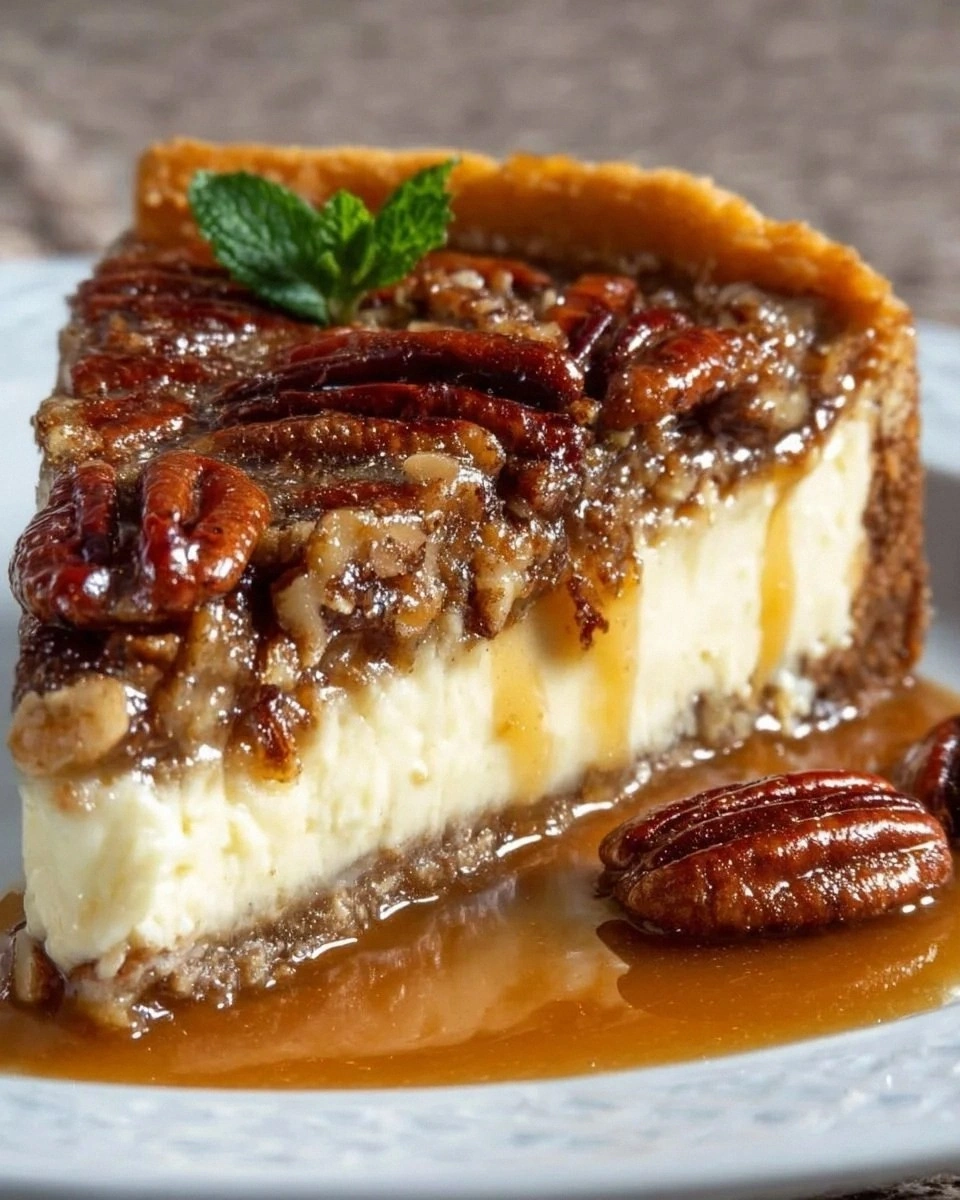
The moment the crust hit the pan, a buttery perfume rose, reminding me of summer picnics and the first bite of a freshly baked cookie. As the pecans toasted, they released a nutty aroma that danced with the sweet vanilla, creating a scent so intoxicating I almost forgot I was still standing in my kitchen. When I folded the cream cheese into the sugar, the mixture became as smooth as satin, promising a velvety finish that would melt on the tongue. The oven’s heat coaxed the top into a caramelized glaze, while the interior stayed luxuriously soft—like a cloud that had just been brushed with golden sunlight. The first forkful was a symphony: crunchy, buttery crust; a caramel‑kissed pecan topping; and a creamy, tangy center that lingered like a sweet secret.
Most recipes out there either treat a pecan pie and a cheesecake as separate entities, never daring to blend them. Most get the crust either too soggy or too dry, and the topping either burns or stays limp. I’ve tried a dozen versions that either collapsed under their own weight or left the pecans looking like a sad, soggy mess. This version, however, uses a precise balance of corn syrup and brown sugar that creates a glossy, crackly crown that stays perfectly set, while the cheesecake layer stays firm enough to slice cleanly yet soft enough to melt in your mouth. I dare you to taste this and not go back for seconds—because once you’ve experienced that perfect contrast, nothing else will compare.
Let me walk you through every single step—by the end, you’ll wonder how you ever made it any other way. Okay, ready for the game‑changer? The secret isn’t a fancy gadget; it’s a simple technique that locks in moisture and gives the pecan topping that signature snap. And now the fun part: we’ll dive into the ingredient lineup, the method, and a handful of tricks that will make this dessert a show‑stopper at any gathering. Stay with me here—this is worth it.
What Makes This Version Stand Out
- Flavor Fusion: The caramel‑sweet pecan topping meets the tangy, creamy cheesecake, creating a taste explosion that feels both familiar and novel.
- Texture Harmony: A buttery, crumbly crust, a glossy, crackly nutty crown, and a silky interior deliver three distinct sensations in every bite.
- Simplicity: Despite the gourmet vibe, the recipe uses pantry staples and a handful of steps—no sous‑vide, no fancy molds.
- Unique Ingredient Balance: Light corn syrup adds shine and prevents the pecans from hardening into a rock, while brown sugar deepens the caramel notes.
- Crowd Reaction: I’ve watched friends stare at the pie, then dive in without a single question—instant applause, no small talk needed.
- Ingredient Quality: Using fresh, unsalted butter and high‑fat cream cheese ensures richness without the need for extra emulsifiers.
- Cooking Method: A gentle bake on the lower rack prevents over‑browning, while a brief broil at the end gives the topping that perfect crunch.
- Make‑Ahead Potential: This pie can be assembled a day ahead, refrigerated, and baked just before serving—perfect for busy hosts.
Alright, let's break down exactly what goes into this masterpiece...
Inside the Ingredient List
The Flavor Base
First up, the graham cracker crumbs. These tiny, honey‑kissed pieces form the foundation, providing a sweet, slightly spicy canvas for the buttery crust. If you skip them, you lose that subtle crunch and the pie will feel like a dense cheesecake without any lift. For a gluten‑free twist, try using crushed gluten‑free vanilla wafers—they bring a similar flavor profile with a delicate texture.
The Texture Crew
The unsalted butter, melted and combined with the crumbs, is the glue that holds the crust together. Using unsalted butter lets you control the salt level, preventing the crust from becoming overly salty. If you only have salted butter, reduce any added salt in the recipe by half to keep the balance. The 0.25 cup of granulated sugar sweetens the crust just enough without making it cloyingly sweet.
The Unexpected Star
Light corn syrup is the unsung hero of the pecan topping. It prevents the nuts from hardening into a brittle rock and gives the glaze that beautiful, glossy finish. Many recipes replace it with honey, but the flavor of honey can overpower the delicate caramel notes. If you’re allergic to corn syrup, a mixture of maple syrup and a pinch of cream of tartar can mimic the texture.
The Final Flourish
The cream cheese, softened to room temperature, is the heart of the cheesecake layer. Its high fat content creates that luxurious mouthfeel that melts like butter on warm toast. If you opt for a low‑fat version, the texture will become grainy and the flavor less rich. Always beat the cream cheese until completely smooth—any lumps will become visible after baking. The 0.75 cup of granulated sugar sweetens the cheese without adding extra moisture, while the 1 tsp vanilla extract adds aromatic depth that ties the whole dessert together.
Everything's prepped? Good. Let's get into the real action...
The Method — Step by Step
Preheat your oven to 325°F (163°C). While the oven warms, combine the graham cracker crumbs, melted butter, and 0.25 cup granulated sugar in a medium bowl. Stir until the mixture resembles wet sand, then press it firmly into the bottom and up the sides of a 9‑inch springform pan. The crust should be even, with no gaps—this ensures an even bake and prevents cracks later.
Place the crust on a baking sheet and bake for 8‑10 minutes, just until it starts to turn a light golden brown. You’ll hear a faint sizzle as the butter caramelizes—listen for that, it’s the cue that the crust is forming a perfect base. Remove from the oven and let cool while you prepare the filling.
In a large mixing bowl, beat the softened cream cheese on medium speed until creamy and free of lumps—about 2 minutes. Add 0.75 cup granulated sugar and continue beating until the mixture is light and fluffy, resembling a thick frosting. Scrape down the sides of the bowl frequently to ensure an even texture.
Mix in 1 tsp vanilla extract, then add the eggs one at a time, beating just until incorporated after each addition. Over‑mixing at this stage can incorporate too much air, leading to cracks on the surface; a gentle hand is key. Once all eggs are folded in, the batter should be smooth, glossy, and a shade lighter than the cream cheese alone.
Pour the cheesecake batter over the pre‑baked crust, spreading it with a spatula to the edges. Tap the pan lightly on the counter to release any trapped air bubbles—this helps the filling settle evenly and reduces the risk of a cracked top.
In a separate saucepan, combine 2 cups coarsely chopped pecans, 0.33 cup light corn syrup, 2 tbsp brown sugar, and the second 1 tsp vanilla extract. Cook over medium heat, stirring constantly, until the mixture bubbles and the sugar dissolves, about 3‑4 minutes. You’ll notice the syrup thickening and the pecans taking on a deep amber hue—this is the moment of pure caramel magic.
Remove the saucepan from heat and let the pecan mixture cool for a minute—still warm enough to spread but not so hot that it melts the cheesecake layer. Drizzle the pecan caramel evenly over the cheesecake, using a spatula to create swirls if you like a rustic look. The topping should sit on top, not sink into the filling.
Place the springform pan on a baking sheet (to catch any overflow) and bake for 35‑40 minutes, or until the edges are set and the center still has a slight wobble when gently shaken. The surface should be lightly golden and the pecan topping glossy. If you prefer a deeper crust, switch the oven to broil for the last 2 minutes—watch closely, as it can go from perfect to burnt in seconds.
Turn off the oven, crack the door open, and let the pie cool inside for 1 hour. This gradual cooling prevents sudden temperature changes that cause cracks. After the hour, run a thin knife around the edge of the springform pan, release the latch, and remove the sides. Transfer the pie to a wire rack and chill in the refrigerator for at least 4 hours, preferably overnight, to set fully.
That's it — you did it. But hold on, I've got a few more tricks that'll take this to another level...
Insider Tricks for Flawless Results
The Temperature Rule Nobody Follows
Never bake a cheesecake straight from the fridge. Let the batter sit at room temperature for 15‑20 minutes before pouring it over the crust. This small step ensures the filling bakes evenly and reduces the chance of a cracked top. I once tried skipping this step; the result was a cheesecake that resembled a cracked desert floor—no one wanted a slice of that.
Why Your Nose Knows Best
Rely on scent, not just timer. When the pecan topping starts to emit a sweet, buttery caramel aroma, you’re near the perfect finish. If you detect a faint burnt smell, pull it out immediately and cover loosely with foil. Your nose can detect subtle changes that a timer simply cannot.
The 5‑Minute Rest That Changes Everything
After removing the pie from the oven, let it sit on the counter for exactly five minutes before moving it to the fridge. This short rest allows the interior to settle, making the final cut cleaner and preventing the top from sinking. I’ve seen people rush straight to the fridge and end up with a soggy crust—trust me, five minutes makes a world of difference.
Cool‑Down Trick for the Crust
If you love a crispier crust, place the cooled pie on a pre‑heated baking sheet for 2 minutes before refrigerating. The brief heat re‑crispes the bottom without melting the cheesecake. It’s like giving the crust a second wind—perfect for those who crave that extra crunch.
Serving Secret: Warm It Up
Just before serving, pop a slice in the microwave for 10‑15 seconds. The warm slice releases the caramel aromas and softens the cheese slightly, creating a melt‑in‑your‑mouth experience. This trick is especially effective on cold winter evenings when you want the dessert to feel cozy.
Creative Twists and Variations
This recipe is a playground. Here are some of my favorite ways to switch things up:
Chocolate‑Swirl Delight
Stir 2 tbsp of melted dark chocolate into the cheesecake batter before pouring. The chocolate ribbons create a marbled effect and add a subtle bitterness that balances the sweet pecan topping. Chocolate lovers will swoon.
Maple‑Pecan Fusion
Replace the light corn syrup with pure maple syrup and add a pinch of cinnamon to the pecan mixture. The result is a warm, autumnal flavor profile that feels like a hug from a grandparent.
Spiced Pumpkin Cheesecake Pie
Swap half of the cream cheese with pumpkin puree and add 1 tsp pumpkin pie spice to the filling. This variation is perfect for Thanksgiving, offering a seasonal twist without sacrificing the classic pecan crunch.
Coconut‑Infused Crust
Mix ¼ cup shredded coconut into the graham cracker crumbs before forming the crust. The coconut adds a tropical note and a slightly chewy texture that pairs beautifully with the buttery pecans.
Salted Caramel Drizzle
After chilling, drizzle a thin stream of homemade salted caramel over each slice. The salty-sweet contrast elevates the dessert to a gourmet level, ideal for impressing guests.
Storing and Bringing It Back to Life
Fridge Storage
Cover the pie loosely with plastic wrap or store it in an airtight container. It will stay fresh for up to 5 days. The crust may absorb a little moisture, so re‑crisp it briefly in a 350°F oven for 5 minutes before serving.
Freezer Friendly
Wrap the entire pie (springform pan included) in a double layer of foil, then place it in a freezer‑safe bag. It freezes well for up to 2 months. To thaw, move it to the refrigerator overnight, then let it sit at room temperature for 30 minutes before serving.
Best Reheating Method
Preheat the oven to 300°F, place the sliced pie on a baking sheet, and warm for 8‑10 minutes. Add a tiny splash of water to the pan—this creates steam that revives the creamy interior without drying it out. The pecan topping will regain its glossy shine.