Picture this: a scorching July afternoon, your kitchen humming like a beehive, and you’re staring at a box of canned pineapple that’s been sitting in the pantry since last Christmas. You’re craving something sweet, bright, and utterly comforting, but the idea of a bland cake feels like a culinary snooze. I was in that exact spot—ready to give up on dessert until a neighbor, with a mischievous grin, dared me to whip up a “classic pineapple upside‑down” that would make even the most seasoned bakers swoon. The challenge was simple: create a cake that balances caramelized sweetness, juicy fruit, and a moist crumb, all while keeping the process breezy enough for a weekend cook.
I pulled out my trusty skillet, a 9‑inch round pan, and a handful of pantry staples, then began to orchestrate a symphony of textures and flavors. The butter melts, releasing a rich, nutty aroma that instantly turns the air in my kitchen into a fragrant promise of indulgence. As I sprinkle brown sugar over the melted butter, the sugar begins to sing a caramelized overture, crackling softly as it caramelizes into a glossy, amber glaze. The moment the pineapple slices slide onto this golden stage, the scent of tropical fruit mingles with the sweet, buttery notes, creating a sensory prelude that makes the heart race.
What sets this version apart from the countless others you’ll find online is its meticulous balance of technique and ingredient quality. I’ve refined the batter to stay tender while still holding the fruit in place, ensuring that each bite delivers a burst of juice without a soggy center. The use of a small amount of melted butter in the batter gives the cake a silky mouthfeel, while the topping’s caramelized sugar creates a delightful crunch that contrasts beautifully with the soft fruit. And because I’ve kept the recipe lean—no unnecessary add‑ons or gimmicks—you’ll see that the classic flavors truly shine through. I dare you to taste this and not go back for seconds.
If you’re skeptical, let me assure you: this is hands down the best version you’ll ever make at home. The cake’s golden top, the glossy caramel, and the fragrant pineapple are all perfectly married, creating a dessert that feels both nostalgic and refreshingly modern. Picture yourself pulling this out of the oven, the whole kitchen smelling incredible, and watching the steam rise in a gentle, fragrant mist that lingers long after the last bite. Stay with me here—this is worth it, and by the end of this post, you’ll wonder how you ever made it any other way.
What Makes This Version Stand Out
- Flavor: The caramelized topping delivers a deep, buttery sweetness that perfectly complements the tropical pineapple, creating a taste profile that’s both comforting and exciting.
- Texture: A moist, tender crumb paired with a crisp, caramelized crust provides a delightful contrast that satisfies every palate.
- Simplicity: Only a handful of ingredients and straightforward steps mean you can whip this up even on a busy weekday.
- Uniqueness: The precise ratio of dry to wet ingredients ensures the batter stays light, preventing the cake from becoming heavy or dense.
- Crowd Reaction: Friends and family rave about how the cake looks as a centerpiece, and the taste keeps them coming back for seconds—yes, I ate half the batch before anyone else got a chance.
- Ingredient Quality: Using fresh, high‑quality pineapple and real butter elevates the dish to a gourmet level.
- Cooking Method: Baking in a pan that can be inverted allows the fruit to stay at the bottom, ensuring every slice has the iconic upside‑down experience.
- Make‑Ahead Potential: This cake can be baked ahead, chilled, and reheated without losing its charm, making it a reliable option for entertaining.
Inside the Ingredient List
The Flavor Base
The foundation of this cake is a classic vanilla‑sweetened batter. All‑purpose flour provides structure, while baking powder and salt create lift and balance the sweetness. A generous amount of white sugar ensures a tender crumb, and whole milk adds moisture without over‑dampening the mix. Each component works in harmony—skip any, and the cake loses its signature lightness.
The Sweet Topping
The topping is where the magic begins. Melted butter combined with brown sugar creates a caramelized glaze that forms a glossy, amber crust. The butter’s fat content is crucial; it prevents the sugar from crystallizing and gives the glaze a silky finish. If you prefer a lighter glaze, reduce the butter by one‑third, but be prepared for a slightly less buttery flavor.
The Unexpected Star
Canned pineapple slices, drained and sliced, bring the tropical zing that defines this dessert. The natural sugars in pineapple caramelize beautifully when placed on the glaze, turning into a caramelized jewel that bursts with flavor. If you’re using fresh pineapple, slice it thinly to match the canned version’s texture, and consider adding a splash of pineapple juice to the batter for an extra fruity note.
The Final Flourish
Maraschino cherries add a pop of color and a subtle, sweet contrast that lingers on the palate. While optional, they’re a classic touch that elevates the cake’s presentation. If you’re avoiding artificial dyes, you can replace them with fresh cherries or even omit them entirely—your cake will still be spectacular.
Everything’s prepped? Good. Let’s get into the real action.
The Method — Step by Step
- Preheat and Prep: Set your oven to 350°F (175°C). Grease a 9‑inch round cake pan with butter, then dust it lightly with flour. This double layer of butter and flour prevents sticking and gives the cake a golden base. While the pan is warming, let’s get the batter ready.
- Whisk the Dry: In a medium bowl, sift together 2 cups flour, 1 tsp baking powder, and 1/2 tsp salt. Whisking aerates the flour, ensuring an even rise. If you’re feeling adventurous, add a pinch of ground cinnamon for a subtle warmth that pairs beautifully with pineapple.
- Beat the Wet: In a separate bowl, whisk 2 eggs, 1 1/2 cups sugar, 1 cup milk, 1 tsp vanilla, and 1/2 cup melted butter until the mixture is smooth and glossy. The butter should be at room temperature; if it’s too cold, it won’t mix well, leading to uneven batter. A gentle whisk ensures the sugar dissolves fully, preventing graininess in the finished cake.
- Combine: Pour the dry ingredients into the wet, stirring gently with a rubber spatula until just combined. The batter should be slightly lumpy—over‑mixing can develop gluten and make the cake dense. Think of this step as a delicate dance; you want the batter to stay airy and light.
- Make the Glaze: Melt 1/4 cup butter in a skillet over medium heat. Sprinkle 1 cup brown sugar over the butter and stir until the sugar dissolves into a thick, amber glaze. The glaze should thicken slightly, not burn. This caramelized base is the secret to that signature glossy finish.
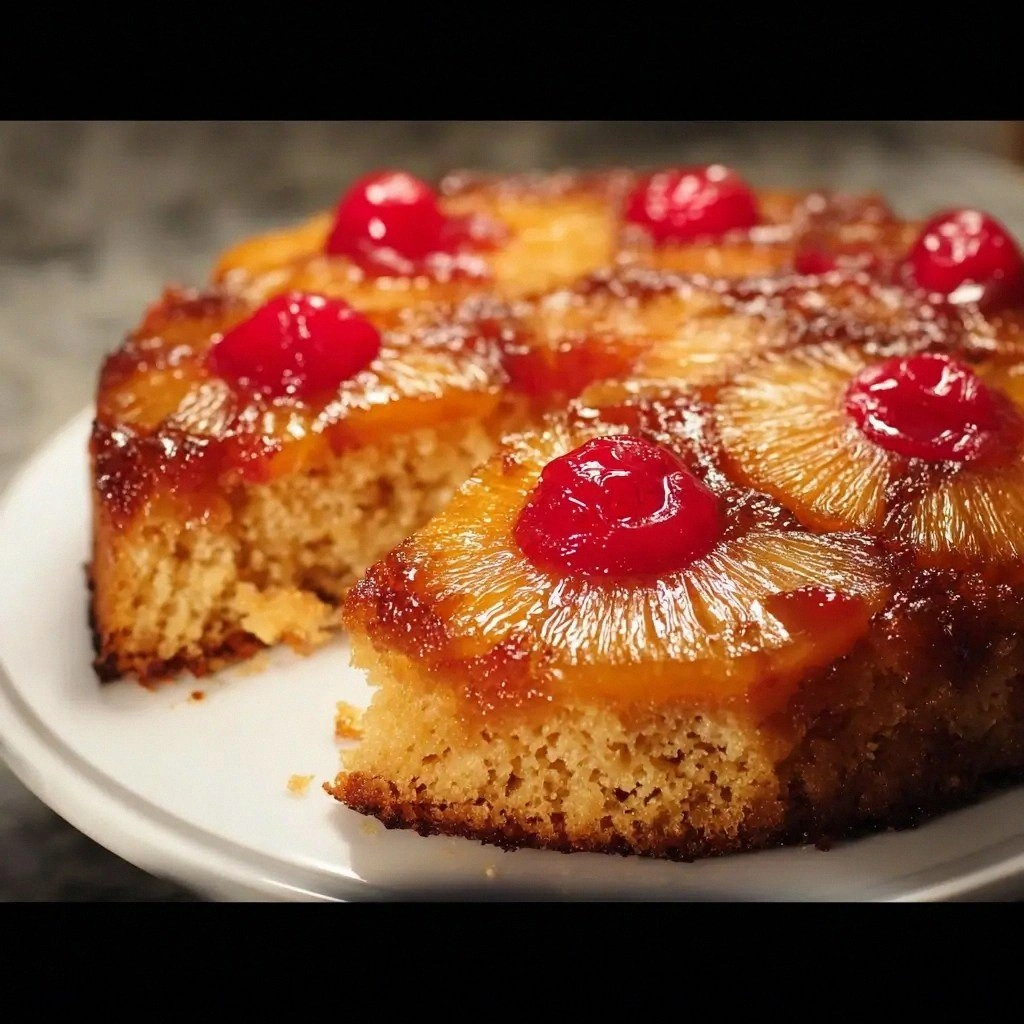
- Arrange the Fruit: Lay the drained pineapple slices over the glaze, arranging them in a circular pattern. Place 12 maraschino cherries on top of the pineapple for a pop of color. This is the moment the cake takes shape—each slice sits like a jewel on a velvet cushion of caramelized sugar.
- Pour the Batter: Gently pour the batter over the fruit, filling the pan to the top. Use a spatula to smooth the surface, ensuring the batter covers the fruit evenly. The batter will rise slightly as it bakes, creating a beautiful dome of cake over the fruit.
- Bake: Slide the pan into the oven and bake for 30 minutes, or until a toothpick inserted near the center comes out clean. The cake should look golden brown, and the edges should pull away slightly from the pan. Watch out: if you leave it too long, the glaze can harden into a brittle shell. Keep an eye on the color; the finish should be a deep amber, not burnt.
- Cool and Invert: Allow the cake to rest in the pan for 10 minutes, then carefully invert it onto a serving platter. The caramel glaze will spread across the top, creating a glossy, irresistible surface. Serve warm for the best texture—if you let it cool too much, the glaze will harden.
That’s it — you did it. But hold on, I’ve got a few more tricks that will take this to another level.
Insider Tricks for Flawless Results
The Temperature Rule Nobody Follows
Many bakers bake at 375°F, but that can scorch the glaze and over‑brown the cake. I’ve found 350°F consistently gives the best balance: the cake rises evenly while the glaze caramelizes without burning. If you’re using a convection oven, lower the temperature by 25°F to compensate for the fan’s extra heat.
Why Your Nose Knows Best
Smell is the quickest indicator of doneness. When the cake is ready, the aroma should be a warm, sweet perfume that lingers in the air. If the scent leans too much towards burnt sugar, you’ve over‑baked. Trust your nose, and you’ll avoid the dreaded “too dark” situation.
The 5‑Minute Rest That Changes Everything
After the 30‑minute bake, let the cake sit in the pan for exactly five minutes before inverting. This brief pause allows the caramel glaze to set just enough to hold its shape, preventing it from spilling off when you flip the cake.
Don’t Skimp on Butter
Butter is the heart of the glaze. Using a butter that’s too low in fat will result in a watery glaze that doesn’t caramelize properly. Opt for a full‑fat butter for the best results, or even a knob of clarified butter for a cleaner, buttery finish.
Serve with a Splash of Pineapple Juice
If you’re craving a bit more tropical punch, drizzle a tablespoon of pineapple juice over the inverted cake before serving. The juice adds moisture to the top layer and enhances the pineapple flavor, making the dessert feel like a vacation in every bite.
Creative Twists and Variations
This recipe is a playground. Here are some of my favorite ways to switch things up:
Tropical Mango Upside‑Down
Swap pineapple for diced fresh mango. The mango’s natural sweetness pairs beautifully with the caramel glaze, creating a dessert that feels like a beach vacation.
Chocolate‑Infused Delight
Add 1/4 cup cocoa powder to the batter for a chocolatey twist. The chocolate enhances the caramel’s depth, while the pineapple adds a bright counterpoint.
Almond Crunch Variation
Sprinkle chopped toasted almonds over the fruit before pouring the batter. The nuts add a delightful crunch and a nutty aroma that complements the sweet glaze.
Citrus Zest Upgrade
Incorporate the zest of one orange into the batter. The citrus notes lift the sweetness and add a refreshing brightness to each bite.
Gluten‑Free Version
Replace the all‑purpose flour with a gluten‑free blend that contains xanthan gum. Keep the rest of the recipe the same, and you’ll have a cake that’s safe for gluten‑sensitive diners.
Cheesecake‑Style Finale
After baking, pour a thin layer of cream cheese frosting over the cooled cake. The tangy frosting balances the caramel sweetness and creates a decadent finish.
Storing and Bringing It Back to Life
Fridge Storage
Wrap the inverted cake tightly in plastic wrap and store in the refrigerator for up to four days. The glaze will firm up slightly, so let it sit at room temperature for 10 minutes before serving to restore its glossy sheen.
Freezer Friendly
Place the cake in a freezer‑safe container, covering it with foil. Freeze for up to two months. When ready to serve, thaw overnight in the refrigerator, then warm in a 300°F oven for 10 minutes.
Best Reheating Method
Reheat the cake in a preheated 300°F oven for 5–7 minutes, or until warmed through. Add a tiny splash of water to the pan before reheating; this steams the cake, keeping it moist and preventing the glaze from drying out.